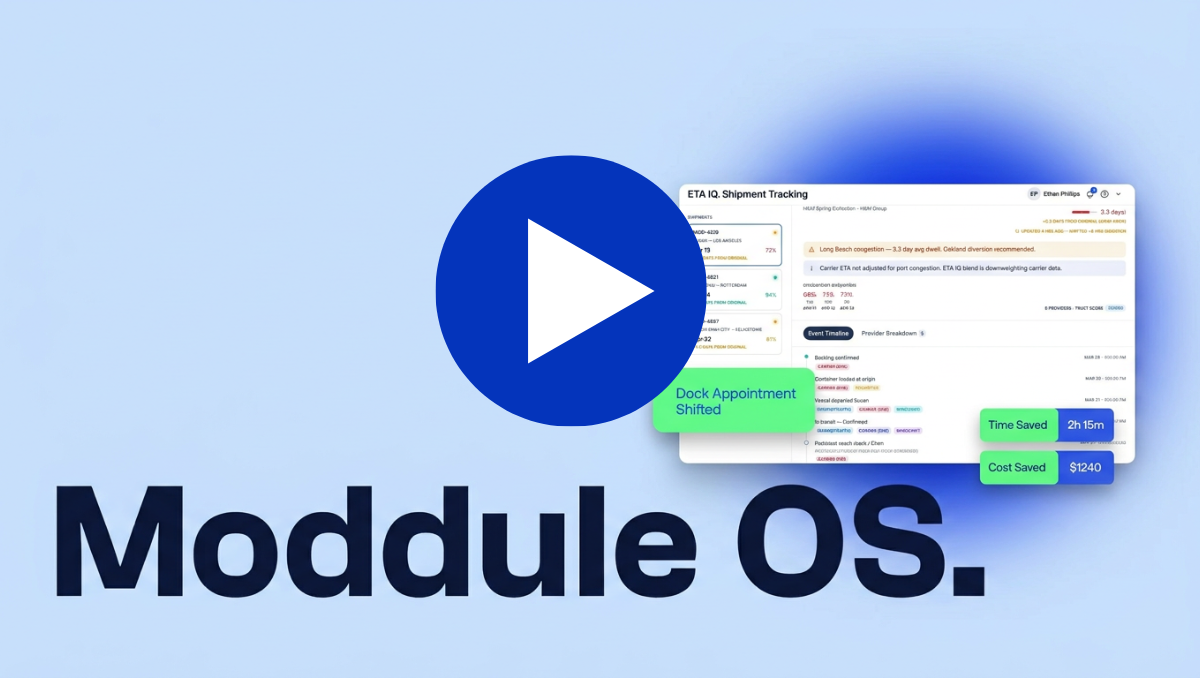
Layer 03 · Orchestration
Moddule OS
Translates intelligence into coordinated action across TMS, WMS, ERP, and specialist tools — automatically, within human-defined guardrails.
The intelligence layer that sits above your existing systems — unifying data, predicting outcomes, and closing the gap between knowing and doing.

Reduce supply-chain costs in 90 days. We implement Moddule on your own data and lanes, measure the impact, and let you see the results before you commit.


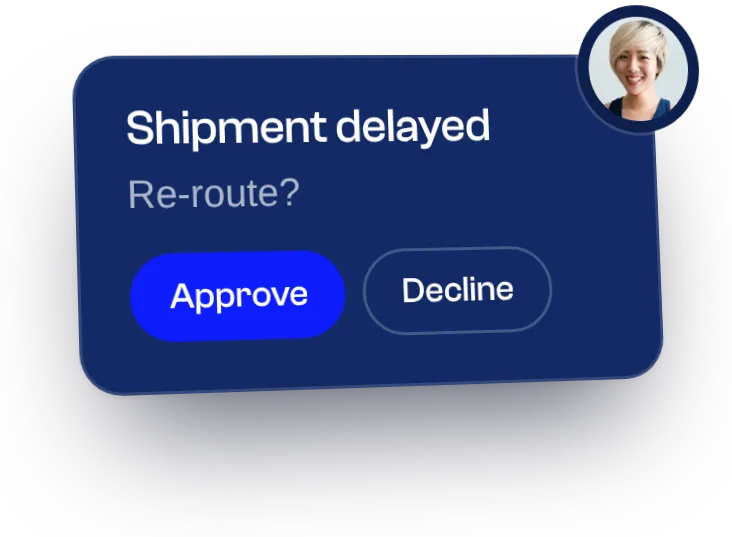

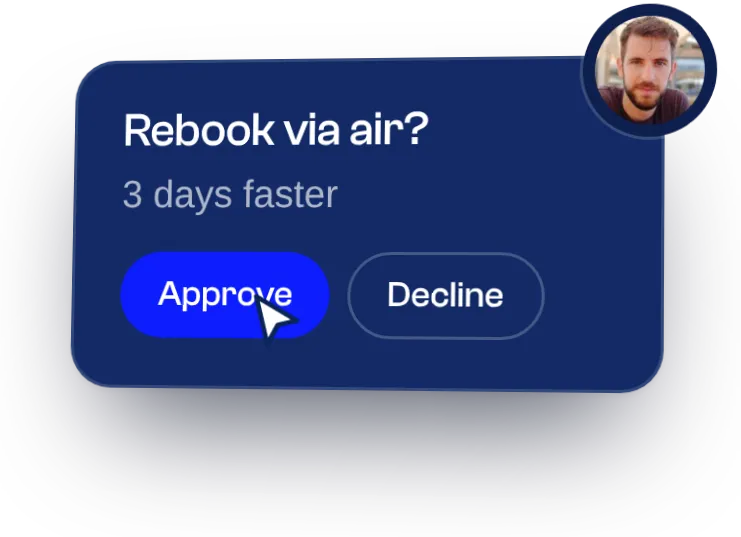

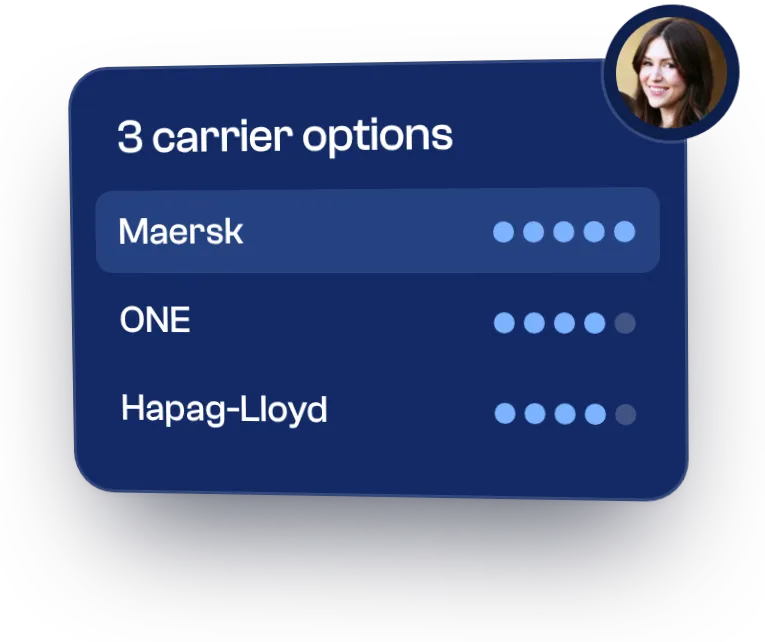
The intelligence layer that sits above your existing systems — unifying data, predicting outcomes, and closing the gap between knowing and doing.
Moddule named to the 2026 FreightTech 100 by FreightWaves, recognized as one of the most innovative companies in freight technology.

Moddule is built as a self-improving system. Each layer delivers standalone value and enables the next — moving you from visibility, to predictive intelligence, to autonomous orchestration.
Translates intelligence into coordinated action across TMS, WMS, ERP, and specialist tools — automatically, within human-defined guardrails.
Trust-scores every prediction across providers, so you always know which data to plan against based on your context.
Ingests and normalises data from every carrier and system, creating a single source of truth across your entire operation.
A prediction is only valuable if you can trust it and only useful if the downstream impact is managed automatically. Every disconnect between predict and act is a measurable financial loss, hour by hour, container by container, shift by shift.
Schedule reliability across the global ocean freight network. This means that four out of every ten shipments do not arrive when originally predicted, costing you real dollars in delays.
Competing ETAs on a single ocean shipment, from carriers, aggregators and port systems — with no way to know which one to trust and plan against.
Operator time per exception to manually propagate one shifted ETA across yard, dock, WMS, ERP and customer comms — every disruption, every day.
Annual cost of poor ETA reliability for an enterprise shipper — across safety stock, emergency freight, warehouse overtime and missed commercial windows.
Your platform shouldn't stop at insight. Moddule keeps going by turning trust-scored data into coordinated action across every connected system, before the window closes.
Normalise data from carriers, TMS, WMS, ERP, and tracking providers into a single operational model — across modes, regions, and partners.
ETA IQ assigns a confidence score to every milestone from every source, so you always know the best data to plan against for your context.
Moddule OS triggers and executes the right action across every connected system, all within the guardrails defined by your team.
We work with the two groups feeling the orchestration gap most acutely — enterprise shippers carrying the financial weight of late arrivals, and logistics service providers running multi-customer operations at scale.
Procurement, planning and logistics teams need a single, trustworthy view of what's actually going to land — so they can plan against it instead of reacting to it.
Operators running multi-customer networks need an intelligence layer that automates the downstream work — without ripping out the TMS, WMS or ERP they already operate on.

25 senior supply chain leaders met at Moddule’s Global Supply Chain Forum at the Royal Automobile Club in London.

The trust graduation model is how orchestration earns its authority in specific contexts, on evidence it can inspect.
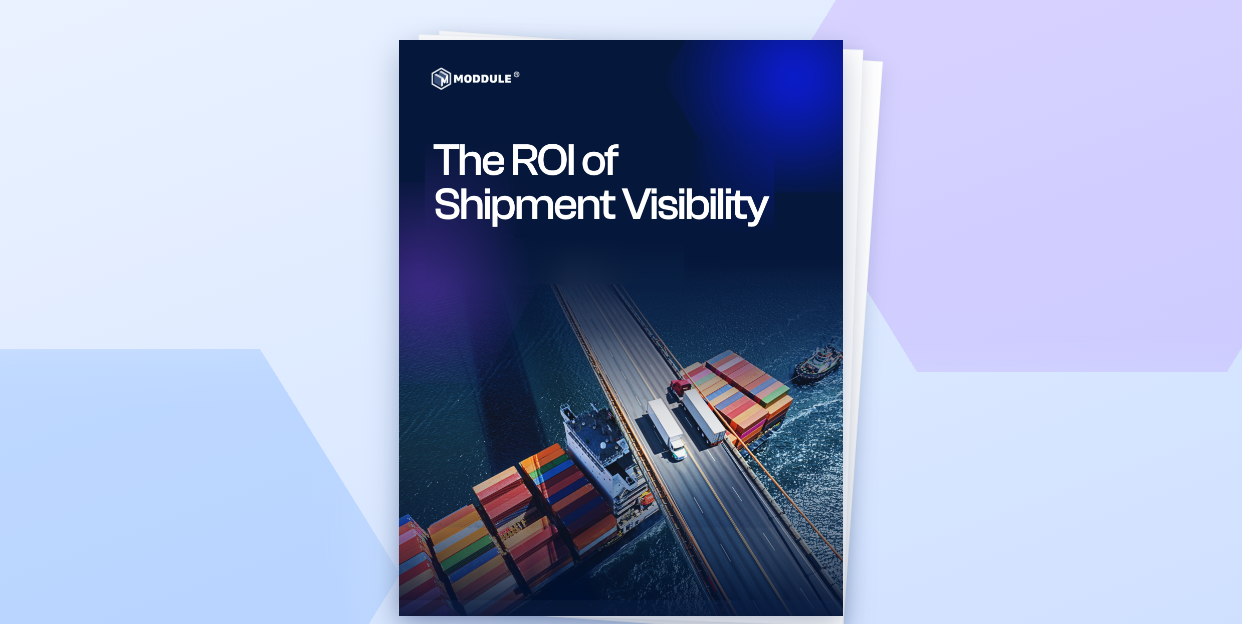
Size what visibility is worth to your LSP. Four cost drivers, from manual tracking to D&D, with formulas and a worksheet for your own data.

A 30-year retail strategy expert on the real gap fashion retailers see today: not just visibility, but the speed to act on it.